
The statutory body, which will be named the National Treasury Management Agency, will act as a debt manager handling the borrowings for the centre and states. Despite being a statutory body, NTMA would be under 'general superintendence and control of the government' and its head would be directly accountable to the finance ministry. The objective of the agency is to meet the borrowing needs of the government at lower cost, and function within an 'acceptable level of risk'.

Fitch Ratings has affirmed India's sovereign credit rating at 'BBB-' with a stable outlook, acknowledging robust growth prospects and strong external finances. However, the agency highlighted concerns over elevated government debt, lagging structural metrics, and potential fiscal spending pressures due to rising youth unemployment.

The focus shall also be on consolidation of public debt and reducing rollover risk through active switch/buyback operations.

'...but should prepare for listing unless a court grants effective interim relief.'

The government's total public debt in the October-December period in this financial year grew by 3.6 per cent to Rs 40,48,219 crore from Rs 39,06,828 crore in the previous quarter.

India's market regulator, Sebi, has approved the re-introduction of open-market share buybacks through stock exchanges, effective August 1, 2026, alongside easing debt listing norms for RBI-regulated entities and simplifying rules for mutual funds and alternative investment funds.

Real Madrid manager Jose Mourinho has stated he feels no added pressure to win the Champions League in his second spell, ahead of their opening match against Inter Milan, emphasising that his current tenure is distinct from his past one.

Six companies, including Blackstone-backed Horizon Industrial Parks and Lalithaa Jewellery Mart, are poised to collectively raise nearly Rs 5,600 crore through initial public offerings (IPOs) in the upcoming week, adding to the bustling primary market activity.

India's public debt decreased marginally to Rs 46,25,037 crore (Rs 46.25 trillion) at end-March 2014 from Rs 46,29,689 crore (Rs 46.29 trillion) at end December 2013.

'The number of airport bundles that may be awarded to a single bidder would be capped.'

India's six publicly listed Real Estate Investment Trusts (REITs) collectively distributed approximately 3,136 crore to over 485,000 unitholders during the first quarter (April-June) of the current financial year (FY27), demonstrating the sector's resilience despite global uncertainties.

Tata Sons approached the RBI in 2024 seeking de-registration after becoming debt-free, a move that would allow it to remain a privately held, unlisted company. The application has remained pending.

The question for the next 20 years is not whether India can become a $5 trillion or $10 trillion economy. Those are attractive targets, but the real question is whether India can create enough productive jobs, educate its children properly, make its cities liveable, and give hundreds of millions of people a substantially better life, asserts Ramesh Menon.

Milky Mist Dairy Food Ltd has set the price band for its Rs 1,553 crore Initial Public Offering (IPO) at Rs 133-140 per share, with subscriptions opening on August 11 and closing on August 13.

'We have a very demanding electorate which expects us to do something. So we will have to do something which is a bit out of the ordinary while at the same time keeping in mind the risk factors.'

Eighteen of India's 28 states exceeded the fiscal deficit ceiling of 3 per cent of GSDP in FY25, a deterioration comparable to the Covid year of 2020-21, according to the Comptroller and Auditor General (CAG). The report also noted a decline in states reporting a revenue surplus, with Bihar, Mizoram, and Telangana moving into deficit.

My family produced a Malayalam movie in 1986. It had big actors in it. The songs were sung by K J Yesudas himself. The film starred two newcomers as the lead pair. It bombed.

Shiprocket plans to allocate a significant portion of its IPO proceeds towards artificial intelligence (AI), aiming to evolve its e-commerce enablement platform into a comprehensive operating system for merchants, enabling conversational commands and reducing manual tasks.

The public sector unit had borrowed Rs 7,500 crore (Rs 75 billion) in the last one month to pay the government for acquiring 3G and Broadband Wireless Access spectrum in the two metros of Delhi and Mumbai.

Manipal Health Enterprises is set to launch India's largest healthcare initial public offering (IPO) on July 29, aiming to raise Rs 9,275.22 crore to fund expansion and debt reduction, with the issue closing on July 31.

A sophisticated cross-bank syndicate is systematically defrauding non-resident Indians (NRIs) and elderly citizens by exploiting their fixed deposits through forged documents and fictitious loans, often involving colluding bank employees and real estate deals.

It's not about how much you earn -- it's about how you borrow and repay.

Ola Electric Mobility Ltd is redirecting 575 crore from its initial public offering (IPO) proceeds, originally earmarked for research and product development, towards debt repayment and organic growth initiatives, signalling mounting pressure on the electric-vehicle maker.

For millions of Indians, this number has become one of the most important financial indicators. It can influence not only whether a bank approves a loan but also the interest rate you pay, the credit limit you receive and, in some cases, how quickly your application is processed.

Reliance Industries Ltd reported a 22 per cent year-on-year decline in consolidated net profit for the June quarter, primarily because the previous year's earnings were inflated by a one-time gain from the sale of its stake in Asian Paints.

Prism, the parent company of OYO, has filed updated draft papers with Sebi for a Rs 6,650 crore initial public offering (IPO) consisting entirely of a fresh issue of shares, with no offer-for-sale component from existing investors.

'What we are witnessing is a massive anti-incumbency wave that has cut across all social and political divides.'

India's Central government is likely to see its fertiliser subsidy bill double to a record 3.4 trillion in FY27, up from the Budget estimate of 1.7 trillion, due to surging global fertiliser prices exacerbated by the West Asia war. This significant increase, coupled with revenue losses from excise duty cuts for oil-marketing companies, is straining the government's fiscal space, though capital expenditure plans remain unchanged.

Pakistan has increased its defence budget by 17.6 per cent to PKRs 3,000 billion for the upcoming fiscal year, as announced by Finance Minister Muhammad Aurangzeb. The federal budget, estimated at PKRs 18,771 billion, targets 4 per cent GDP growth, with significant allocations for debt service and pensions. Prime Minister Shehbaz Sharif highlighted economic stability and ongoing discussions with the IMF, while the opposition protested Imran Khan's incarceration during the budget session.

Indian startup funding plummeted by 43 per cent year-on-year to $7.81 billion between March 1 and June 15, 2026, largely due to the West Asia conflict, which has amplified global risk perceptions, tightened liquidity, and led to rupee depreciation, making global investors cautious.

'Investors shouldn't let fear dictate their decisions. The most important step is simply to begin investing.'

API Holdings, the parent company of online pharmacy PharmEasy, has significantly reduced its debt from 1,800 crore to 1,050 crore and refinanced it at lower interest rates under CEO Rahul Guha, shifting its focus from 'growth at any cost' to profitability and aiming for a debt-free balance sheet before a potential stock market listing.

There are various estimates of India's debt to GDP ratio, but the consensus is that that it would be over 80 per cent at the end of the current fiscal year.

Investors are keenly awaiting clarity on Reliance Jio Infocomm's IPO, the company's AI and data centre strategies, and next-generation leadership structure at Reliance Industries Ltd's (RIL's) 49th annual general meeting (AGM).

The forthcoming Budget could think of maintaining public capital expenditure at 3 per cent so that domestic resources are available for private investments, points out N R Bhanumurthy.

If TVK MLAs and ministers are perceived as clean, or demonstrably cleaner than their predecessors, the credibility dividend will be enormous. The voter will feel rewarded, points out Ramesh Menon.
'When I look at India's relative valuations, these are by far the lowest I have seen in my 35-year career.' 'The relative 12-month trailing performance is among the weakest I have seen, and foreign investor positioning is at a 16-17 year low.'

India's five publicly listed Real Estate Investment Trusts (REITs) collectively distributed more than Rs 2,566 crore to over 425,000 unitholders in Q4FY26, with a cumulative distribution exceeding Rs 8,900 crore for the full fiscal year.
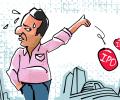
Companies are primarily using funds raised through fresh equity issuance to repay existing debt, followed by allocation for capital expenditure, according to a study by Bank of Baroda of over 200 filings with the market regulator between April and October 2025. The report stated that of these filings with the Securities and Exchange Board of India (Sebi) - covering both funds already raised in FY26 and future intent - 189 companies provided clear data on the purpose of the fund-raising.

India's retail inflation, which has stayed below the Reserve Bank of India's (RBI's) 4 per cent target in recent times, is likely to remain benign in the coming months, RBI Deputy Governor Poonam Gupta said in a speech, on Friday, which was uploaded on the central bank's website on Tuesday. Headline inflation dipped to multi-year lows of around 1.5-2.8 per cent in late 2025.
